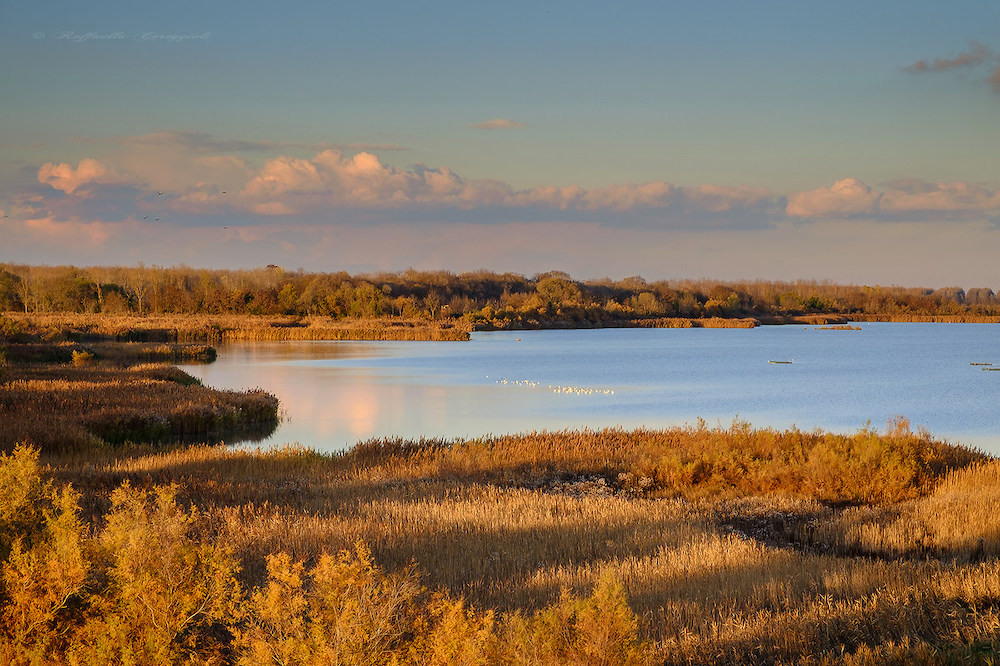
Venice is a city shaped by water, and the lagoon that surrounds it is far larger than what you see from the canals in the historic centre. It stretches across more than 550 square kilometres and is divided into two distinct areas: the Northern Lagoon and the Southern Lagoon. The Northern Lagoon is the one most people are familiar with. It is home to Murano, renowned for its glassmaking, Burano with its brightly coloured houses and lace, Torcello with its Byzantine basilica, as well as Sant’Erasmo, Mazzorbo and Le Vignole. These islands attract millions of visitors every year and are the most photographed part of the lagoon. There is, however, another side of Venice that rarely appears in guidebooks, a place without queues outside museums or crowded vaporetti. This is the Southern Lagoon, a vast and peaceful landscape stretching south of the city, shaped by water, reed beds, fishing channels and a deep sense of stillness. At its centre lies Valle Averto, a WWF-managed nature reserve where water, wind and the changing seasons define the landscape, each bringing its own colours and atmosphere. If you think of Venice only as a city, you are missing the part that perhaps has the most to say.
Venice’s Southern Lagoon: what to see and why it is worth visiting
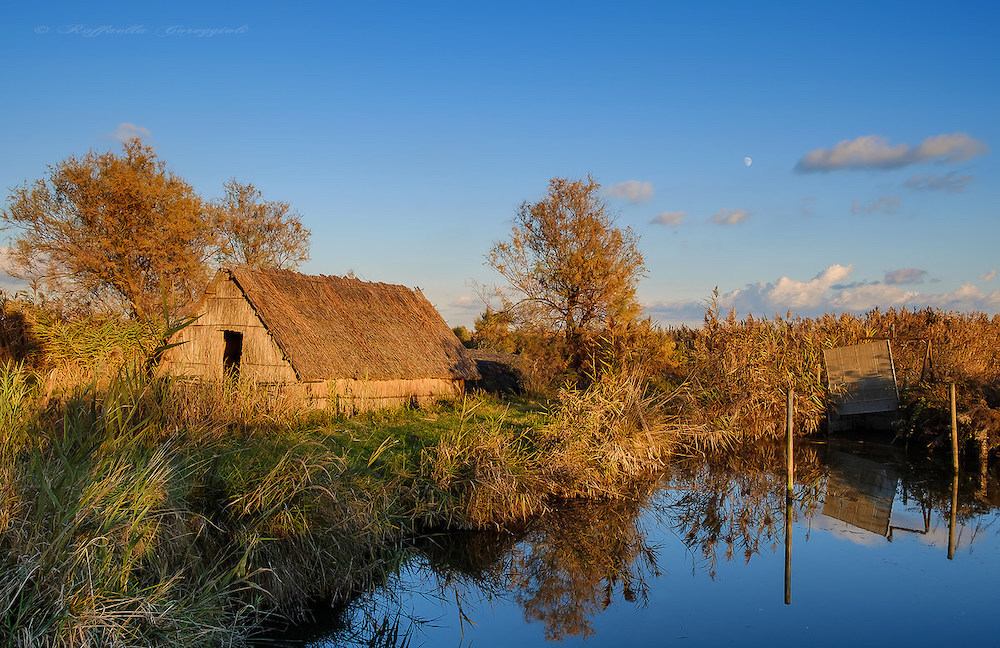
Leaving Venice and heading into the Southern Lagoon feels like entering a different world. Wilder and quieter than anything you will find to the north, it remains largely untouched, crossed by narrow canals and fishing channels that date back to the time of the Venetian Republic. Exploring it aboard the traditional boats of ATN Laguna Sud, accompanied by a guide who knows every waterway and every story, offers a rare glimpse into a place that has remained unchanged over time. Along the way, you will hear about fishermen, their huts and traditions that are still passed down from generation to generation.
Valle Averto: the WWF nature reserve in the heart of the Southern Lagoon
Valle Averto is one of the most important nature reserves in northern Italy. Managed by WWF since 1980, it covers more than 300 hectares of lagoon, salt marshes, reed beds and pools, creating an ideal habitat for dozens of bird species, including some that are rare or endangered.
Birdwatching in Valle Averto: what to see and when to go
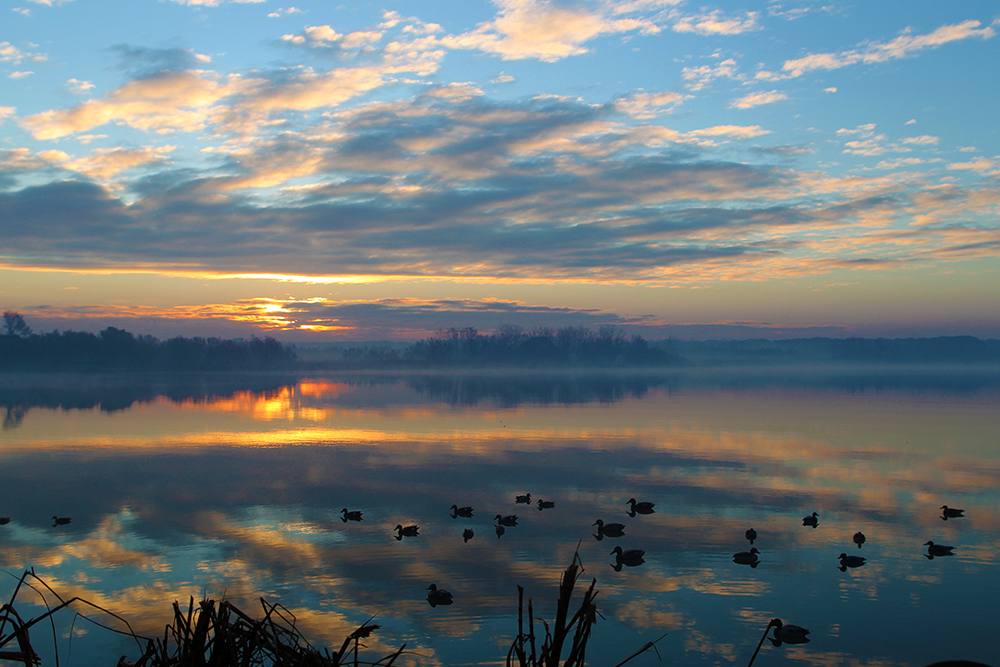
For birdwatchers, Valle Averto is one of the richest observation areas in northern Italy, with species to be seen throughout the year. In spring and autumn, during migration seasons, you may spot greater flamingoes, grey herons, little egrets, black-winged stilts, spoonbills and, if you are particularly lucky, the elusive bittern. Year-round, the reserve is also home to resident colonies of cormorants and wild ducks. It is not only the wildlife that stands out. Reed beds alternate with salt marshes covered in glasswort, a plant typical of brackish environments that turns vivid shades of red and orange in autumn, transforming the landscape into something almost surreal. In spring, the palette shifts to deep greens, with marsh flowers blooming along the canals.
The fishing and hunting valleys of the Southern Lagoon: Venetian history and tradition
The Southern Lagoon is dotted with fishing and hunting valleys, enclosed basins of brackish water where traditional Venetian fishing and hunting have been practised for centuries. Each has its own story and identity.
Valle Cornio is one of the oldest. The canal that runs through it was already an important trade route in the days of the Serenissima, and sediments on the riverbed still contain traces of naval archaeology.
Valle Figheri is associated with Casone Labia and its watchtower, Torre della Padovana, and is crossed by a canal that opens onto wide views of salt marshes and the flat horizon of the Southern Lagoon.
Valle Zappa is unlike any other. At its centre stands a hunting lodge built in the 1920s by the architect Duilio Torres, inspired by a Dutch farmhouse. Its curved lines and bright colours create a striking contrast with the surrounding lagoon landscape. Inside, each room is painted in a different colour, corresponding to the “botte”, the hunting post assigned to each guest. This was a fixed position among the reeds from which lagoon game was hunted. On the night before the hunt, guests would sleep in the room linked to their post, so that by morning they already knew where to go. On the chimney hoods on the ground floor, proverbs in Venetian dialect can still be read, while outside the watchtower reflects in the water like a small lighthouse.
The casoni are the traditional buildings of the lagoon, simple dwellings with roofs made of marsh reeds where fishermen once spent entire seasons away from the mainland. Travelling through these waterways with an expert guide helps you understand how this ecosystem works: how sea bass, sea bream and mullet are reared, how water is managed in harmony with the tides, and how generations of fishermen have learned to live alongside the lagoon.
When to visit the Southern Lagoon: the best seasons
One of the most fascinating aspects of this area is how it changes throughout the year.
In spring, the lagoon comes to life. Migratory birds arrive in large numbers, vegetation regains its colour, and the soft morning light on the water alone makes the visit worthwhile.
In summer, the landscape becomes brighter and more intense, with strong reflections and an even deeper sense of silence. It is the ideal time for early morning or sunset excursions.
In autumn, the colours become particularly striking. Red glasswort, golden reeds and the first migrating flocks make it perhaps the most photogenic season.
In winter, the lagoon takes on an almost Nordic character. Low mists blur the outlines of the salt marshes, grey herons stand motionless in the water, and a soft, diffused light lingers briefly before fading into darkness.
How to visit the Southern Lagoon: tours and access points
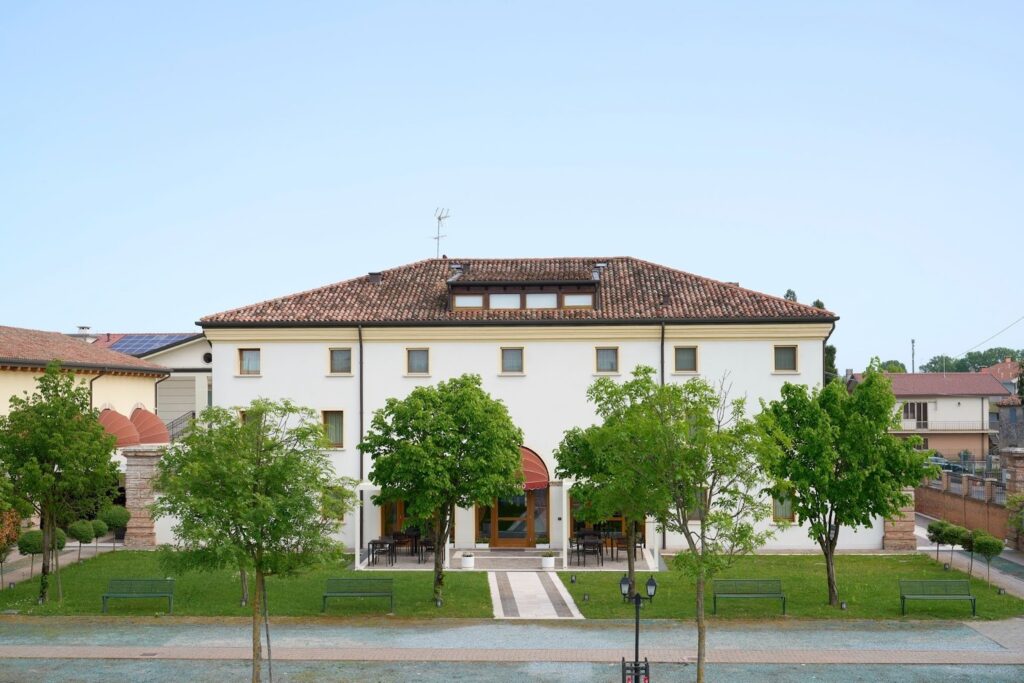
The ideal starting point is Campagna Lupia, a small town in the province of Venice, perfectly positioned between the Riviera del Brenta and the Southern Lagoon. Here you will find Antica Corte Marchesini, a historic 17th-century villa surrounded by greenery, an ideal place to slow down, enjoy breakfast and set off for the day at a relaxed pace.
Valle Averto and the ATN Laguna Sud boarding point are less than three kilometres from the hotel, just a few minutes by car. Boat tours last either half a day or a full day, giving you just the right amount of time to explore and fully appreciate the landscape.
Venice’s Southern Lagoon: an authentic experience to be had at least once
The Southern Lagoon is one of those places that changes the way you see a destination. It does not have the fame of Venice and rarely appears on typical must-see lists, yet those who discover it find it difficult to forget. It is a place defined by silence, still water, landscapes that shift with the light and the seasons, and stories shared by a guide as the boat moves slowly through the valleys. For those who want to immerse themselves fully in this atmosphere, the best way is to explore the heart of this ecosystem up close, with a dedicated tour of the WWF Valle Averto Nature Reserve.
Discover the WWF Valle Averto Nature Reserve tour in the Southern Lagoon.