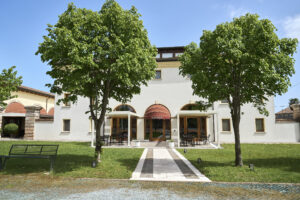
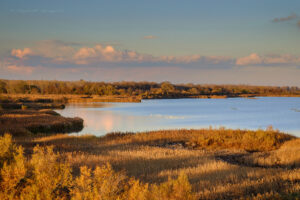
Between Padua and Venice there is an enchanted path: the Naviglio del Brenta. Walking through it means encountering majestic villas that evoke the magic of classicism, enchanting gardens, pieces of the past and of a culture that has been handed down over the centuries.
The Riviera del Brenta is a territory that tells centuries of history: Casanova, Galileo, Byron and d’Annunzio frequented it; Giambattista Tiepolo, Giovanni Battista Cimaroli, Francesco Guardi and Canaletto painted it; Goethe and Goldoni praised it. There were many historical figures who stayed there, such as Napoleon, the Habsburgs and Savoy.
When in 1345 the law that prohibited the citizens of the Serenissima from buying land on the mainland was repealed, part of the interests of the Venetian aristocracy moved along the banks of the Brenta. Here, the nobles of the time created their holiday residences and today those same architectural wonders have become, in part, private residences that can be visited by the public.

Discovering the Villas of the Brenta
Between uncontaminated nature and gardens with attention to the smallest detail, you will encounter numerous characteristic villas. Since each has its own peculiarities and is unique in its own way, it is difficult to suggest which ones to go first. A characteristic way to explore them is the mini-cruise in Burchiello, the boat that in 700 used the wealthiest classes to reach their villas in the countryside.
Villa Pisani, also known as “the National”
Among the most famous of the place, Villa Pisani is located in Stra, in the province of Venice, and extends over an area of 11 hectares. Thanks to its monumentality it was often chosen as a residence or seat for meetings between monarchs, heads of state and government. Within its walls and in its 114 rooms (now 168) stayed figures such as Napoleon Bonaparte, Charles IV of Spain, Tsar Alexander I and Ferdinand II of Bourbon. In 1884 it became a museum. In 1934 it hosted the first official meeting between Mussolini and Hitler and in 1969 it was used by Pier Paolo Pasolini for the filming of the film Porcile. In short, history transpires from its walls.

Every corner of Villa Pisani is an enchanted wonder: from the park full of original architecture and the famous labyrinth, to the great attention dedicated to botany with greenhouses and large tree specimens, to the English grove to the west of the park added in the Napoleonic era.
Not to mention the magic that is released by exploring the rooms inside the Villa. Here your gaze will be captured by the suggestive frescoes, paintings and furnishings of the National Museum that it houses.
The eighteenth-century rooms of Villa Pisani give back a clear idea of court life. You will immediately realize this when crossing the threshold of the Hall of the Trionfo di Bacco, the Hall of the Villeggiatura which offers a representation of the relationship between ladies and knights, the Dining Room that evokes the atmosphere of the banquets of the Napoleonic court, the Dance hall the magnificent ceiling with the “Glory of the Pisani family“, frescoed by Tiepolo. In addition to pictorial masterpieces, you will find furnishings from the past, such as four-poster beds and precious Empire-style furniture that will transport you back in time.
Villa Pisani is a real gem of delight and beauty, a majestic jewel to which you will no longer want to say Goodbye …
Villa Foscarini Rossi and its handmade shoes

Close to Villa Pisani, there is the 17th century architectural complex called Villa Foscarini Rossi. Famous architects such as Vincenzo Scamozzi, Francesco Contini, Giuseppe Jappelli, as well as painters and decorators such as Pietro Liberi and Domenico de Bruni worked on the Villa to emphasize the importance of the family that resided there.
Inside it contains details of inestimable beauty: the Hall with frescoes dating back to 1652, the Attic with ovoid windows and mighty trusses, the perfect Portico to enjoy the green spaces, the Cellars with exposed brick walls and original 17th century beams. and, finally, the Garden, 10 thousand square meters of greenery dotted with centuries-old trees and flowers of infinite varieties and colours.
But the element to which all refer Villa Foscarini Rossi is the Museum of Footwear, a collection of over 1,500 models of luxury women’s footwear, produced by the shoe factory in over seventy years of activity, the result of its collaborations with the most prestigious on the international scene.
Villa Widmann, location of cultural and social events and exhibitions
Its history begins in 1719 and goes through extensions and renovations that made it the elegant and refined Villa we see today. It includes the manor house with the garden and the adjacent courtyard, the barchessa characterized by an airy portico, the consecrated church where Elisabetta and Arianna Widmann are buried and the vast park on the north with the greenhouse, the eighteenth-century statues, numerous tree species, such as pines and lime trees, a pond and fascinating birds, including colourful peacocks.
Today its main purpose is to host events, meetings, conferences and cultural activities, as well as art exhibitions, thanks to the auditorium and two large exhibition rooms.
Villa Foscari known as “La Malcontenta”
A few kilometres as the crow flies from the center of Venice, Villa Foscari is Palladio’s only one along the Brenta Riviera. There are several hypotheses for her nickname “La Malcontenta”, from the lady relegated within its walls in solitude to serving her sentence for her licentious conduct, to the discontent expressed by the inhabitants of Padua and Piove di Sacco for the construction of the Brenta Canal, up to the often overflowing of the river and consequent flooding of the lands of the farmers who used to repeat “Brenta mal contenta”.
In perfect Venetian style, it is enriched with classical references from the 4th and 5th centuries AD. well known to Palladio. Among his frescoes there are the allegorical mythological ones by Gian Battista Zelotti and those by Battista Franco, called Semolei.
Today, Villa Foscari shows the signs of time, but its atmosphere remains suggestive and its precious details.
Those described are just some of the most precious and well-known villas of the Brenta, but the list is still very long: Villa Tron Mioni Carrara is worth a visit for the noble chapel with an octagonal plan dedicated to the Madonna del Carmine; Villa Belvedere will enchant you with its caves and the small castle inside the park; Villa Valier was the site of official celebrations and sumptuous receptions; Villa Bembo – the oldest in the Brenta – is the place where Pietro Bembo, illustrious philosopher and writer, stayed in the sweet company of Lucrezia Borgia!
The endless villas of the Riviera del Brenta are works of art and architecture to be admired and explored … by bicycle!
Did you know that from the Antica Corte Marchesini Hotel you can delight yourself with a bike ride to discover the Riviera del Brenta, the so-called “Garden of Venice”? We have studied and prepared a package for you that will take you to explore, get to know and admire the wonderful Venetian Historic Villas: Villa Widmann Foscari Rossi, the Barchessa Valmarana and the unfaltering Villa Pisani.
Dedicate unforgettable moments or share special moments with those you care about: we are here to welcome you and make you fall in love with our magnificent territory!