Campagna Lupia sits between the Riviera del Brenta and the southern lagoon, deep in the Venetian countryside. From here, Venice, Padua and Chioggia are all about half an hour away, ideal for day trips out and back in the evening. The Venetian Villas along the Naviglio and the thermal spas of the Colli Euganei are within easy reach too.
This location takes the hassle out of planning a trip. Rather than changing hotels at every stop and repacking each night, you simply set up one base. In the morning you pick where to go, from the great art cities to the lagoon landscapes and the historic villas, then head back in comfort at the end of the day.
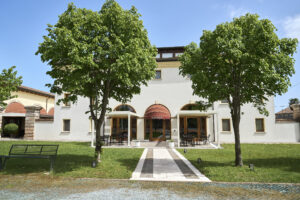
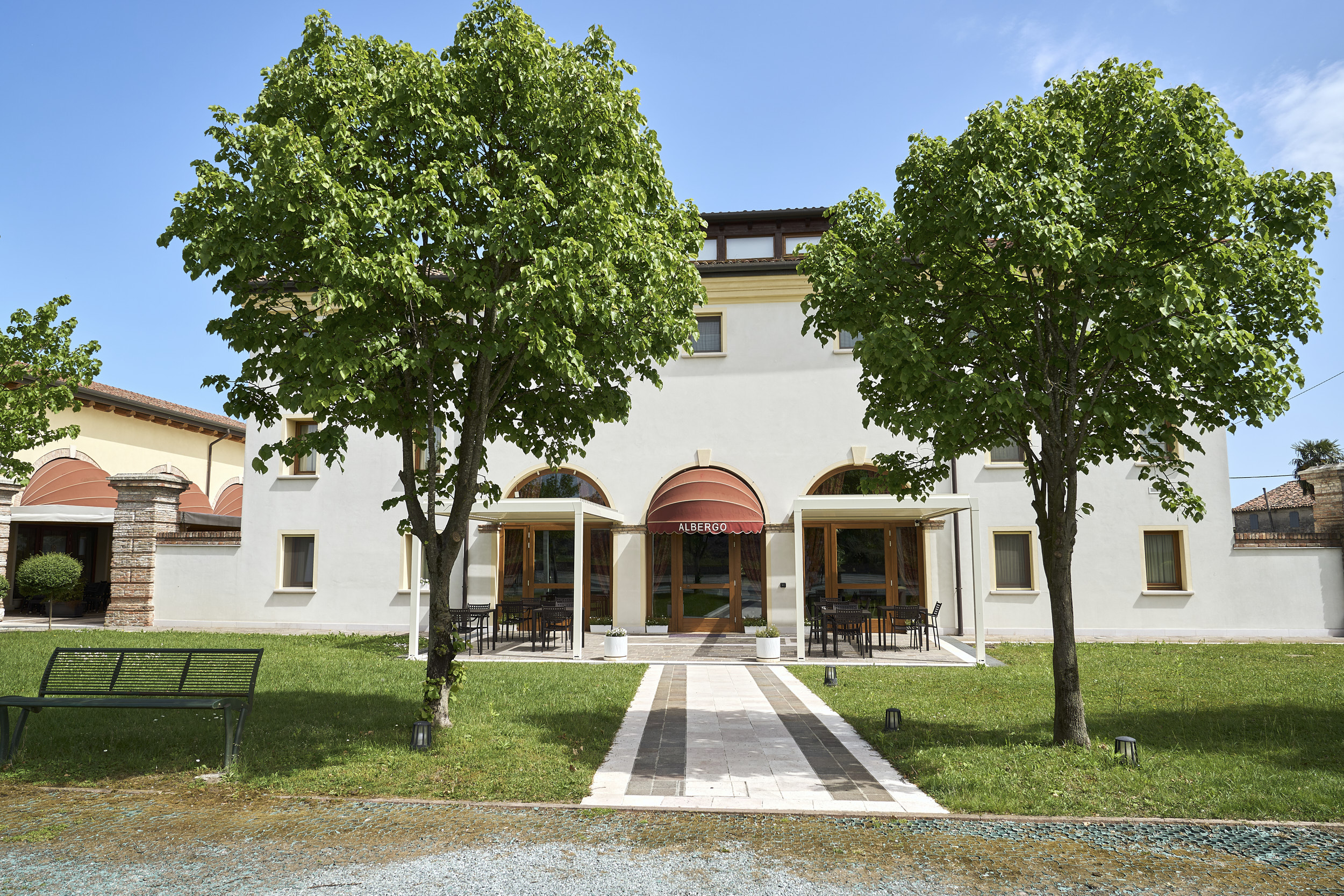
L’Antica Corte Marchesini, a historic seventeenth-century residence, meets that exact need. The train station and the bus stop are barely 300 metres away, the on-site private car park gives you complete freedom to come and go, and the Strada Statale Romea 309, around five minutes away by car, connects the property quickly to the whole region. Time spent in transit shrinks to almost nothing, leaving far more of the day for exploring.
The people who welcome guests here help make the most of each day, too. A chat at the reception desk, in the evening on your way in or before you set off, is a chance to pick up precise tips and the sort of detail no guidebook carries: a historical anecdote about a particular villa on the Brenta, a quiet corner among Venice’s sestieri, or the right osteria in Chioggia for a lunch of fresh fish. That exchange is an opportunity to reshape your plans around the weather or how you feel that morning, and to change the scene from one day to the next: from the bustle of the historic squares to the waterways, and on to the stillness of the nature reserves.
Below are the main destinations in the surrounding area, to choose and combine entirely as your interests take you.
Venice: from the historic centre to the lagoon islands
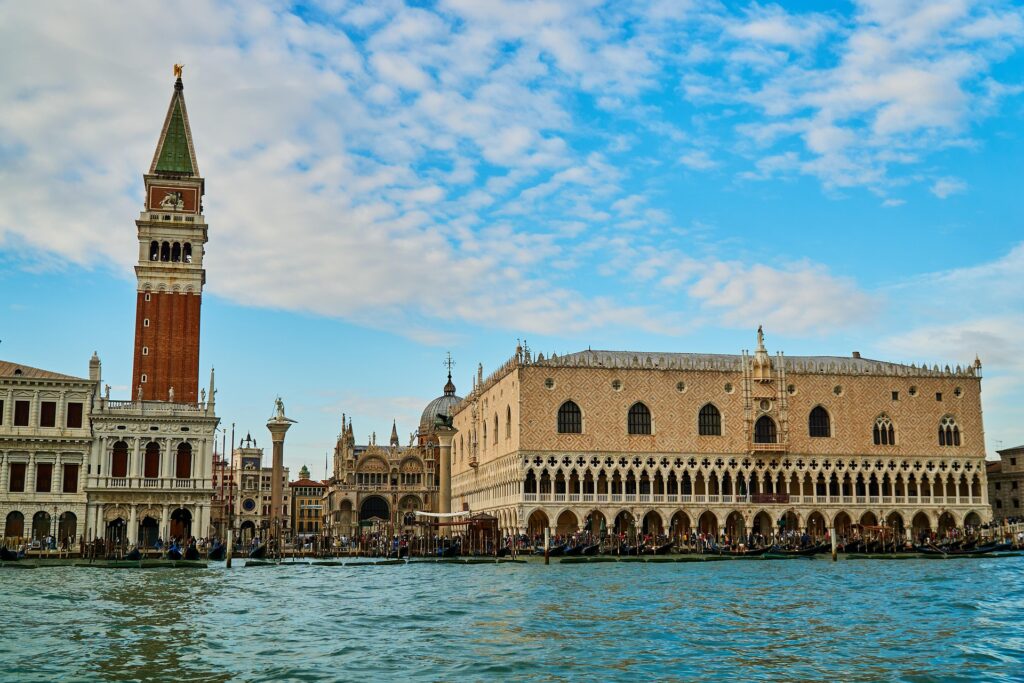
Trains leaving Campagna Lupia reach Venezia Santa Lucia station in under 40 minutes. Step outside the station and the Grand Canal opens up right in front of you, marking the start of the walk into the heart of the city.
A single day is enough to combine the most famous sights, such as St Mark’s Square with the Basilica and the Doge’s Palace, the Rialto Bridge and the Gallerie dell’Accademia, with a wander through the quieter corners, where you’ll find silent campielli, small artisan workshops and historic osterie.
If you want to explore the lagoon beyond the historic centre, the islands offer completely different scenery. On Murano you can watch the master glassmakers at work inside the old furnaces. Burano welcomes you with the bright colours of its fishermen’s houses and its tradition of needle lace, while Torcello, all but deserted today, is home to the ancient Byzantine basilica of Santa Maria Assunta and its golden mosaics.
Choosing our historic residence lets you come and go entirely as you please, leaving the crowds of the city behind and returning in the evening to the quiet of the countryside.
We explore the advantages of this choice in our article Sleeping outside Venice: the choice that transforms your trip.
The Riviera del Brenta and the Venetian Villas
Our historic residence is only a few kilometres by car from the Naviglio del Brenta. The road meets the river at Dolo, an ideal starting point for splitting the visit in two directions: heading up the Naviglio towards Padua, or following the current towards Venice.
The town of Dolo is the liveliest hub on the Riviera del Brenta. The streets of the old centre are lined with shops and small businesses, while the area around the sixteenth-century Squero (the historic boat-repair yard) and the old watermill is where you’ll find the small bars and cafés, perfect for a spot of lunch or an aperitivo outdoors. This part of town, looking out over the Naviglio, brings together its river heritage and its everyday social life.
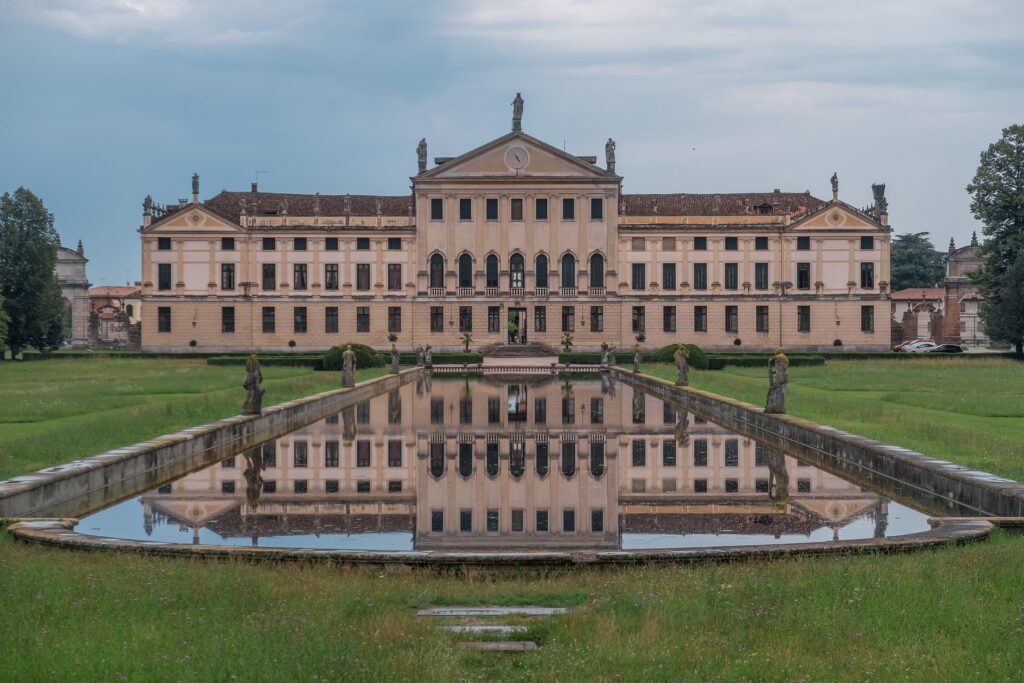
Travelling from Dolo towards Padua, you pass through Fiesso d’Artico and reach Stra, home to Villa Pisani, the second largest residence in Italy by area. This monumental palace welcomes visitors into 30 grand rooms, among them the Ballroom frescoed by Giambattista Tiepolo in 1761. Outside, a very long central pool runs through the park, mirrors the building’s façade and draws the eye all the way to the great eighteenth-century stables, skirting the famous hedge maze.
Also in Stra, Villa Foscarini Rossi houses the Museo della Calzatura d’Autore within its decorated rooms. The collection brings together more than 1,500 luxury designs that tell the story of international fashion and the skill of local craftsmen.
Turning back from Dolo towards Venice, you enter the area of Mira, where the patrician residences follow one after another along the embankments. The route takes in Villa Widmann Rezzonico Foscari, known for its rococo frescoed halls and its garden of period statues, and the nearby Barchessa Valmarana, whose rooms preserve eighteenth-century painted cycles devoted to rural life on the old estate. The final stop is La Malcontenta, the celebrated villa that Andrea Palladio designed for the Foscari family at the point where the canal flows into the lagoon basin, built on a strict geometric balance.
By boat or on two wheels: the alternatives to the car
For an experience entirely on the water, the guided excursion aboard the Burchiello retraces the historic route between Padua and Venice, with scheduled stops to explore the interiors of the Riviera’s main villas. The hotel provides all the information you need on the routes and handles the ticket booking directly for guests.
If you prefer to travel on two wheels, you can make use of the bicycle hire service offered by the hotel, which also supplies GPS maps of the cycle routes to the villas. Once you’ve collected your bike, a network of quiet back roads leads you to the banks of the Naviglio del Brenta in just a few minutes. From there you follow the flat cycle path along the water, ideal for exploring the most characterful stretches between Dolo, Mira and Stra, taking a close look at the parks and the façades of the historic residences before heading back to base.
The Southern Lagoon and the WWF Oasis of Valle Averto
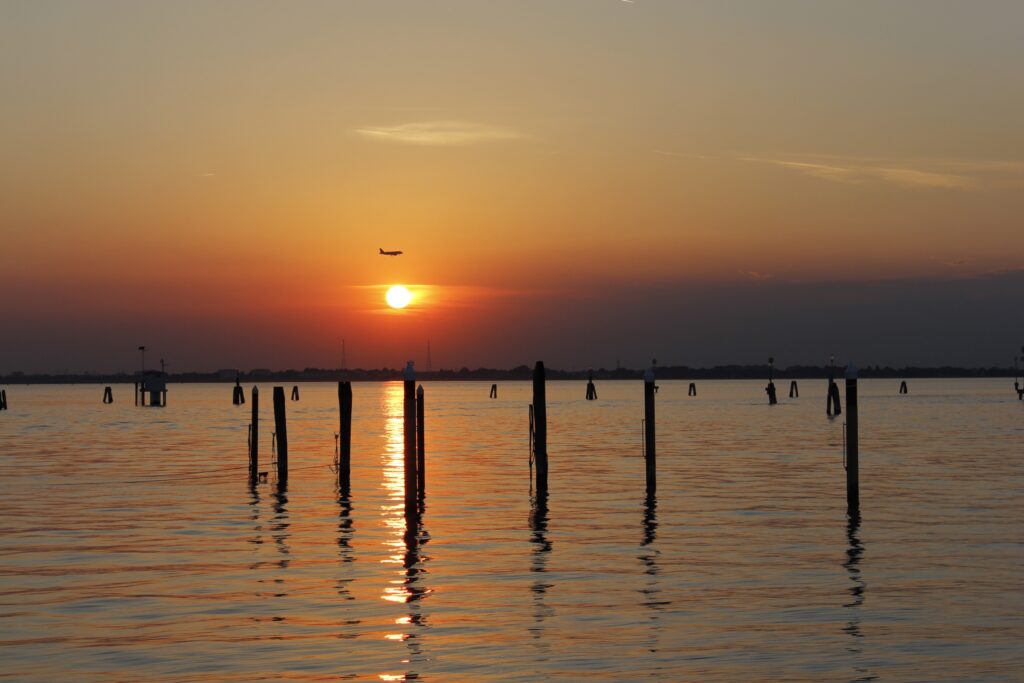
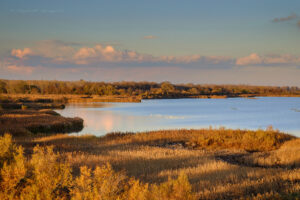
The Southern Lagoon is the quietest and best-preserved part of the whole Venetian basin. At the heart of this untouched setting lies the WWF Oasis of Valle Averto, a protected reserve of more than 300 hectares, less than 3 kilometres from the hotel. Here the fresh water of the rivers meets the salt water of the sea, creating a unique ecosystem. The paths through the reserve cross salt marshes and dense reed beds, providing ideal vantage points for spotting migratory and resident birds in every season.
The area is also where boat trips set off into the valli da pesca, the enclosed lagoon basins used to farm fish for centuries. As you sail, the guides explain how the historic sea bass and sea bream farming systems work, taking visitors as far as the casoni. These buildings, with their large sloping roofs of marsh reed, once gave shelter to the fishermen who spent months here keeping watch over the fishery, protected from the lagoon weather.
Exploring this ecosystem is a way to understand the history and rural culture of the Venetian waters. If you’d like to learn more about the origins of these places, you’ll find further detail in our article Valle Averto and the Southern Lagoon of Venice, while the guided excursion can be booked via our special WWF Oasis Valle Averto package.
Padua: Giotto’s masterpieces and the grand historic squares
About 40 minutes away, whether by car or by train, Padua reveals an extraordinary cultural heritage within a lively historic centre that’s easy to explore on foot. Among the most notable sights is the Scrovegni Chapel, home to the famous cycle of frescoes Giotto painted in the early fourteenth century. This masterpiece is part of Padova Urbs Picta, the circuit of fresco cycles inscribed on the UNESCO World Heritage list. As these are very popular sites, visiting the Chapel, like several other city attractions, requires booking in advance.
Crossing the streets of the old centre towards the ancient walls, you come to the University Botanical Garden, founded in 1545: it is the oldest academic botanical garden in the world still on its original site, and its collections of rare plants sit within a setting that is itself protected by UNESCO.
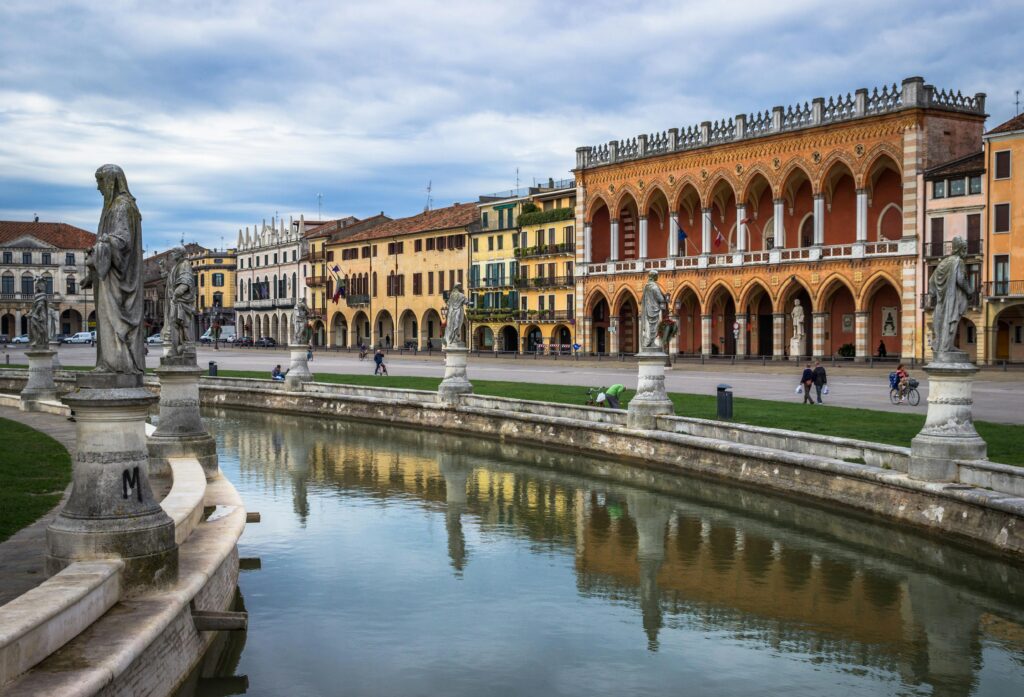
The route carries on to Prato della Valle, one of the largest squares in Europe. Its oval shape is unmistakable: at its centre lies a green island ringed by a canal. Around the water and along the four bridges stand 78 statues of historical figures connected with Padua.
A short walk away rises the Basilica di Sant’Antonio, an important place of pilgrimage that holds Donatello’s precious Renaissance bronzes. Walking towards the central squares, where the daily markets are held, you come across the historic Caffè Pedrocchi, the nineteenth-century building known for its grand rooms and long famous as a meeting place for intellectuals, students and academics.
Exploring Padua in a day lets you bring together the beauty of great museums, architecture and historic porticoes in a single trip, before heading back to Campagna Lupia in the evening.
The Euganean Hills: thermal spas, villages and walled towns
Just beyond Padua, the Parco Regionale dei Colli Euganei brings together a volcanic landscape and ancient history. At the foot of the hills, Abano and Montegrotto Terme make up one of the oldest thermal spa districts in Europe. The healing properties of the deep waters, already prized in Roman times, now feed spas that specialise in mud therapy and poolside relaxation, perfect for a restorative break.
The vine-covered slopes are dotted with historic villages and grand period residences. The most striking is Arquà Petrarca, a medieval village that has kept its fourteenth-century layout intact, along with the house where the poet Francesco Petrarca spent his final years. In the same area you’ll find the Castello del Catajo at Battaglia Terme, a monumental princely residence full of frescoed halls, and Villa dei Vescovi at Luvigliano di Torreglia, an elegant Renaissance work now protected and open to the public as a FAI property (Italy’s equivalent of the National Trust).
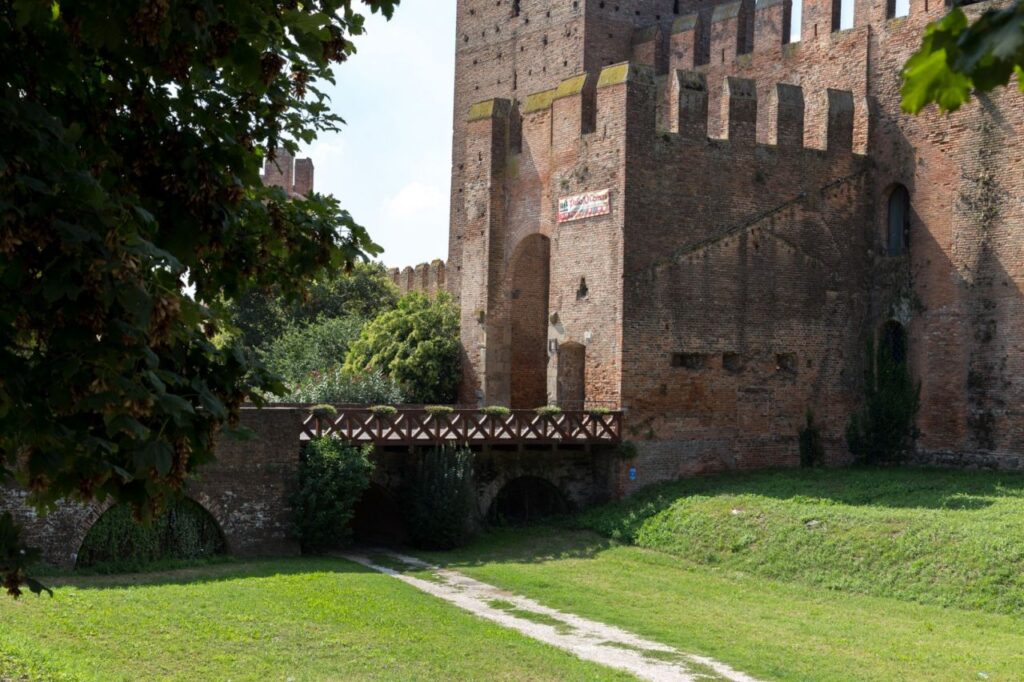
From the foot of the hills the route stretches on to the historic walled towns of the plain. Monselice spreads out below its fortified rocca; a little further west, Este boasts its fourteenth-century Carrarese castle and the collections of the Museo Archeologico Nazionale Atestino. The itinerary ends at Montagnana, famous for its medieval walls of more than 2 kilometres, which remain perfectly intact today. This ring of fortifications rounds off a varied route rich in history, around an hour’s drive from our door.
Chioggia: the seafaring soul of the lagoon
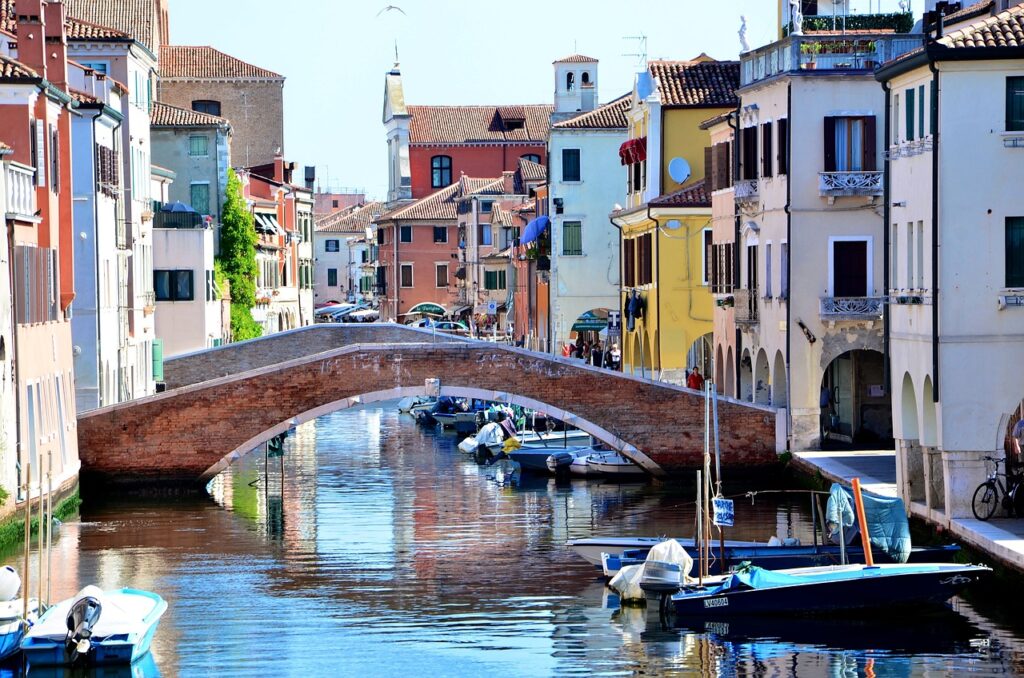
Chioggia sits on a cluster of small islands linked by bridges and canals, keeping the historic character of a fishing town wholly intact. The navigable waterways and the stone bridges form its distinctive herringbone layout, with the historic façades reflected straight in the canals. Corso del Popolo runs the length of the old centre and leads to the Duomo di Santa Maria Assunta, home to canvases by Palma il Giovane. Nearby, the morning fish market, one of the busiest trading hubs on the whole Adriatic, reveals the real life of the local community and gives a glimpse into traditional fishing life.
From the old centre, crossing the bridge that links the town to the mainland, you reach the shore at Sottomarina, ideal for pairing your sightseeing with time by the sea in the summer months. The beach stretches along a wide, breezy expanse of sand, renowned for its exceptionally fine grain, and offers the perfect spot for a stroll along the water’s edge before heading back to the hotel.
Three days from a single base: a sample itinerary
Using the hotel as your base means you can plan a different route each day without ever changing where you stay at the end of the evening. A three-night stay is the ideal amount of time to combine Venice, the villas of the Riviera and the lagoon landscapes.
Day 1: Venice
The whole day is given over to Venice. Trains leaving Campagna Lupia arrive at Venezia Santa Lucia station, a gateway into the city that lets you avoid the traffic and the cost of car parking. From there the route unfolds on foot or by vaporetto, taking in the historic monuments of St Mark’s Square, the main bridges and the quieter sestieri. In the evening, the same rail link brings you back to Campagna Lupia, where you can dine at the Ai Quattro Archi restaurant, right next door.
Day 2: the Riviera del Brenta
The route follows the course of the canal, which you can cover by car or on the hotel’s hire bikes. The central point of reference is Dolo, ideal for a lunch stop or an aperitivo outdoors between the old squero and the former watermill. From there you can move on to visit Villa Pisani at Stra, with its Tiepolo ballroom and hedge maze, or the monumental residences of Mira, such as Villa Widmann and La Malcontenta.
Day 3: Valle Averto and Chioggia (or Padua)
The morning starts less than 3 kilometres from the hotel, with the guided excursion through the canals and reed beds of the WWF Oasis of Valle Averto. Later you head to Chioggia, to stroll along the canals, visit the old fish market and reach the shore at Sottomarina. If you’d rather spend the day entirely on art, you can swap the second half for a visit to Padua, to see the Scrovegni Chapel and the porticoes of the historic centre.
If you decide to extend your stay and add a fourth night, you can stretch the itinerary further, taking in a day of relaxation among the medieval villages and historic thermal spas of the Euganean Hills.
The value of an evening return and dinner just steps away
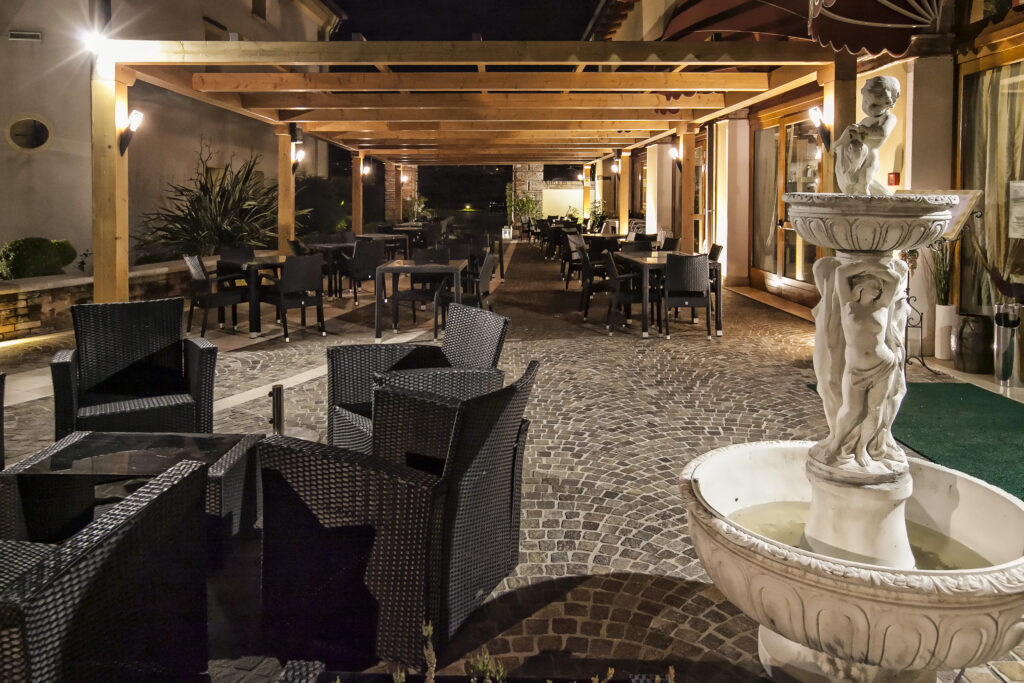
At the end of the day, once your route through the art cities, the villas of the Riviera or the lagoon landscapes is over, coming back to the hotel marks a moment of complete rest. The Ai Quattro Archi restaurant is right beside the entrance to the property: dining just steps from your room means you don’t have to get back behind the wheel, carrying the comfort of the day through into the evening.
All around the residence, the large wooded park and the calm of the Venetian countryside welcome guests into a quiet, peaceful setting, far from the flow of tourists you meet out on your visits. This makes it the ideal place to rest and recharge, ready for the next morning’s destination.